News Coatings Technologies
Carbonate placement enables degradable PE-like polymers
Researchers demonstrate that the precise placement of hydrolysable carbonate units along a polyethylene-like backbone enables chemical deconstruction while preserving crystallinity. The approach opens design routes for degradable polyolefin-type materials with tunable thermal and mechanical properties.
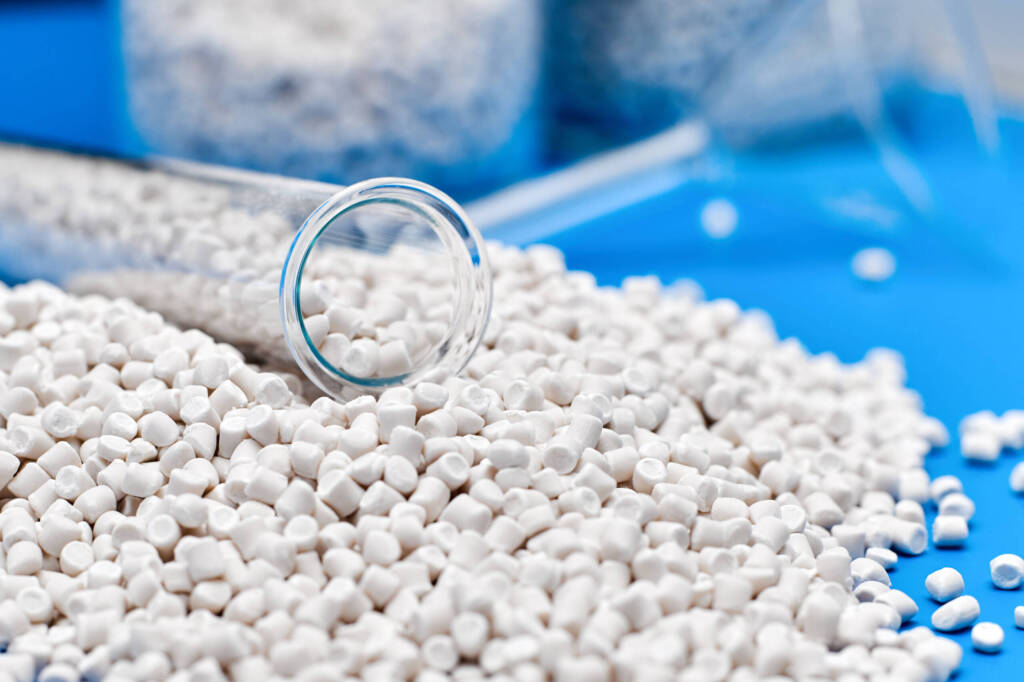
The crystallinity of polyethylene is central to its mechanical strength, thermal stability and barrier performance, yet the same non-polar, crystalline architecture makes the polymer highly resistant to backbone degradation. Introducing hydrolysable groups along the chain offers a route to degradability, provided that the crystalline structure is not compromised. The present study addresses this challenge by synthesising polyethylene-like polymers containing carbonate units at precisely defined positions along the backbone.
The materials were prepared by acyclic diene metathesis (ADMET) polymerisation followed by mild hydrogenation, allowing exact control over both the density and placement of carbonate functionalities. Three variants — PCO3-10C, PCO3-14C and PCO3-18C — were produced with progressively longer uninterrupted methylene sequences between carbonate units.
Reading tip:
Bio-based coatings The EC Tech Report “”Bio-based Coatings“” is a hand-picked compilation of all the key aspects concerning bio-based coatings, offering the latest technical developments. Leading R&D experts present their various binder developments, how binders can be produced sustainably and also how the performance of your coatings can be optimised. Exclusive market insights and data as well as an impressive package of digital bonus material round off this Tech Report.
Thermal behaviour and crystalline architecture
Thermal analysis showed that melting temperatures increased from 35 °C to 50 °C and 76 °C as the methylene sequence length grew, confirming that crystallinity is retained by the methylene-rich domains. X-ray scattering revealed that the carbonate groups are excluded from the interior of the lamellae and are instead located at the termini of orthorhombic crystallites. This positioning indicates that the carbonate units act as the dominant source of chain-folding within the semicrystalline material.
Because the carbonate groups are surface-localised, they are accessible to acid-catalysed hydrolytic cleavage. The authors exploited this to break the materials down into small molecules, demonstrating a viable deconstruction pathway. The findings provide a mechanistic understanding of how dipolar, hydrolysable groups interact with polyethylene domains and offer design principles for embedding degradable units into polyolefins without sacrificing bulk crystallinity. The concept could support future development of sustainable polyolefin-type materials with tailored thermal, mechanical and chemical properties, which may also be of interest for coating and packaging applications requiring both durability and end-of-life degradability.
Source: Bianculli, R. H. et al., Controlling crystallinity in degradable poly(ethylene carbonate) polymers by precision carbonate placement. Polym. Chem. 17, 3306–3312 (2026).