News Coatings Technologies
Microencapsulated adhesives: bonding at the push of a button
Researchers at Fraunhofer IAP have developed microcapsules that encapsulate the components of a two-component adhesive and release them only under pressure. The approach aims to simplify industrial bonding processes, improve occupational safety and enable isocyanate-free adhesive systems for automotive, electronics and mechanical engineering applications.
Adhesive bonding joins components across large surface areas, combines dissimilar materials and enables lightweight construction. In industrial practice, however, adhesive application often represents an additional process step, requiring dosing, application and curing. Direct handling of reactive adhesive components can place additional demands on occupational safety, process control and training. Depending on the material system, temperature, substrate and load, the adhesion of conventional adhesive tapes may also change over time.
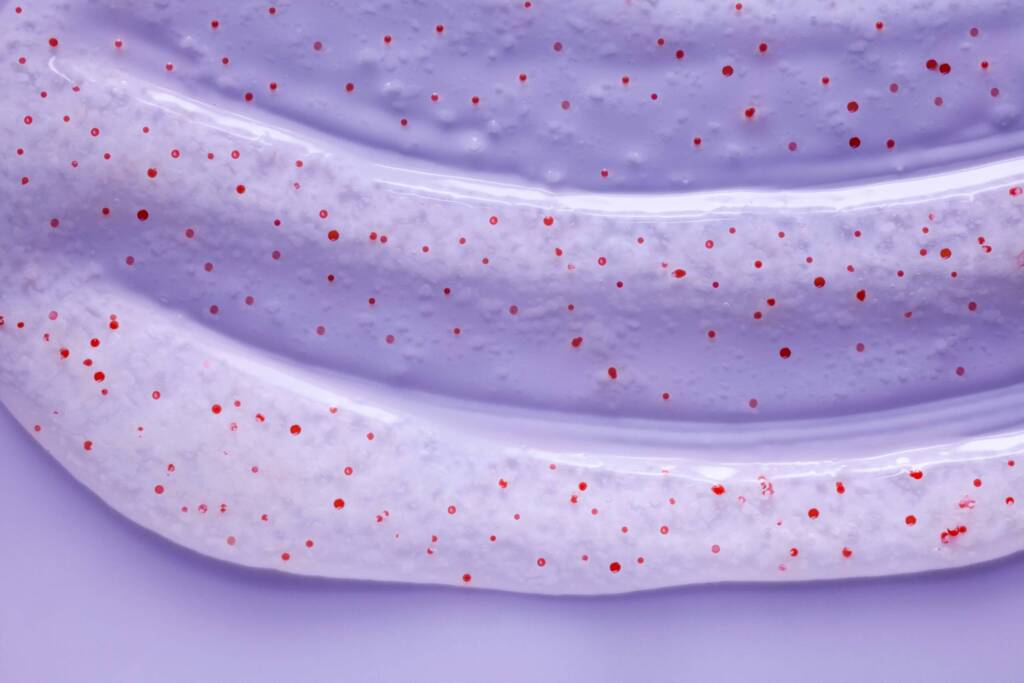
To address these challenges, the Fraunhofer Institute for Applied Polymer Research IAP in Potsdam is developing microscopic capsules within the Fraunhofer Cluster of Excellence Programmable Materials CPM. Each capsule encloses one component of a two-component adhesive system. As long as the capsules remain intact, the system stays inactive. When pressure is applied, the capsules rupture, the components meet and the adhesive cross-links – forming a firm bond precisely at the contact surface, at room temperature and without additional curing steps.
Precision capsule chemistry and safer handling
The main technical challenge lies in the encapsulation itself, as reactive two-component adhesives may interact with the chemicals used to form the capsule shell. According to Dr Christian Neumann, scientist at Fraunhofer IAP, the capsule chemistry can be tuned very precisely so that the adhesive components remain active, are reliably enclosed, can be stored and processed, and open selectively when pressed. Because activation only occurs during the joining step, workers come into less direct contact with reactive components. The researchers also focus on isocyanate-free adhesive systems based on acrylates or epoxides, making the technology attractive for companies aiming to avoid isocyanate-containing formulations.
Reading tip: Formulating Adhesives and Sealants (2nd Edition)
This fully revised guide offers hands-on support for developing and testing modern bonding and sealing systems. Covering fundamental chemistry, formulation know-how and practical examples, it’s ideal for professionals in R&D and technical development.
Adhesive textiles and industrial pilot testing
In a next development stage, the microcapsules are to be applied to flat carrier materials such as textile substrates or fibre knits, turning the adhesive into a handleable interlayer material that can be positioned in the component and activated only during joining. Potential applications include battery stacks in the automotive industry, mechanical engineering, electronics manufacturing and microstructured components with fine channels, where conventional dosing and application methods are technically demanding or economically unattractive. Bond strength is being evaluated together with the Fraunhofer Institute for Machine Tools and Forming Technology IWU. At the Fraunhofer Pilot Plant Centre for Polymer Synthesis and Processing PAZ, microcapsules can be produced up to the tonne scale, providing sufficient material for application-oriented testing. Fraunhofer IAP is now seeking industrial and research partners contributing specific components, carrier materials or assembly processes.
Source: Fraunhofer Institute for Applied Polymer Research IAP, Press release: Bonding at the push of a button – microencapsulated adhesives (25 June 2026).