News Coatings Technologies
Bio-based dithiolane ink enables 3D printing across scales
Researchers have developed a bio-sourced dithiolane-based ink suitable for high-resolution light-based 3D printing on both macro- and microscales. The novel formulation enables tuneable thermal depolymerisation through an embedded latent base, providing a sustainable alternative to conventional (meth)acrylate systems.
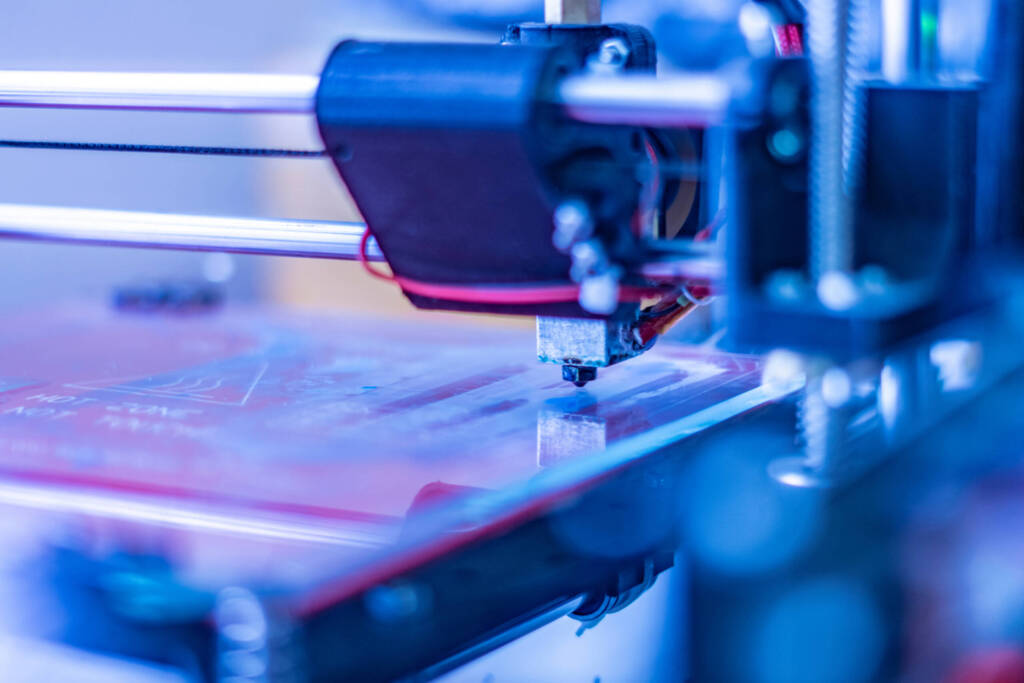
Light-based 3D printing has long depended on (meth)acrylate inks, whose carbon-backbone networks are difficult to degrade and limit end-of-use options. To address these sustainability challenges, researchers at Heidelberg University have introduced a bio-sourced dithiolane-based ink derived from lipoic acid, a naturally occurring molecule. Upon irradiation, the strained 1,2-dithiolane rings undergo ring-opening polymerisation, forming dynamic disulfide networks without the need for potentially toxic photoinitiators.
The new ink was evaluated across multiple length scales. Using digital light processing (DLP), the researchers fabricated macroscale objects, while two-photon laser printing (2PLP) enabled the production of complex microscale structures with fine feature resolution. The successful processing across both techniques demonstrates the versatility of the dithiolane chemistry as an alternative to established (meth)acrylate-based formulations.
Reading tip: Light Stabilizers for Coatings
Discover the importance of light stabilizers in maintaining coatings’ durability and appearance with “”Light Stabilizers for Coatings.“” This book explores the chemistry, mechanisms, and applications of light stabilizers, essential for coatings exposed to outdoor conditions or UV radiation.
Tuneable depolymerisation through latent base chemistry
A key innovation lies in the incorporation of a thermally latent base into the printable ink. Upon thermal activation, the base triggers exchange reactions within the dynamic covalent network, enabling controlled depolymerisation of the printed structures. The strategy was shown to function effectively for both DLP-printed macroscale parts and 2PLP-fabricated microscale features.
According to the authors, this work represents the first reported example of targeted depolymerisation in microprinted structures using an embedded latent base. The combination of bio-based feedstock, photoinitiator-free processing and tuneable end-of-use behaviour offers a promising (meth)acrylate-free pathway towards more sustainable additive manufacturing across scales.
Source: Klee, P. S. et al., High resolution light-based 3D printing of a bio-sourced monomer with tuneable depolymerisation. Polymer Chemistry (2025).