News Coatings Technologies
Self-healing polythiourethane coating enables durable ice removal
A dynamic polythiourethane coating with reversible thiourethane bond exchange achieves low interfacial toughness for efficient ice detachment and fully restores its anti-icing performance after damage through thermally driven self-healing.
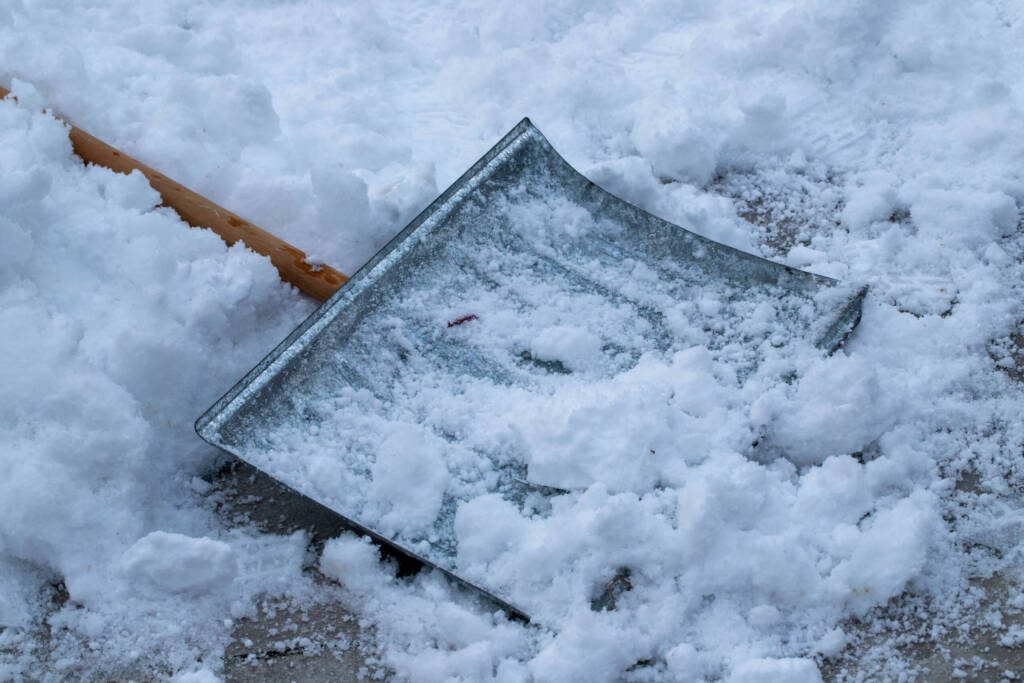
Surfaces engineered with low interfacial toughness (LIT) allow efficient large-scale ice removal, but they are inherently vulnerable to damage during prolonged service. Once damaged, mechanical interlocking between ice and the substrate increases, progressively degrading anti-icing performance – a limitation that has restricted the practical durability of conventional LIT approaches. A research team has now addressed this challenge by designing the first self-healing LIT coating based on dynamic covalent adaptable networks.
The coating is built on a polythiourethane (PTU) chemistry that leverages the reversible exchange of thiourethane bonds. This dynamic network endows the material with intrinsic self-healing capability while retaining excellent mechanical robustness and anti-icing function. The optimised PTU coating achieved a low interfacial toughness of 0.69 J/m² with ice and exhibited a well-defined toughness-dominated ice detachment regime.
Reading tip:
Gain in-depth knowledge about the next generation of sustainable surface protection with “Sustainability of Coatings”. This essential resource addresses the environmental impact of coatings across their entire life cycle, guiding formulation chemists, engineers, R&D specialists, and decision-makers in quantifying and improving ecological performance. Dive deep into the principles of circular economy and climate protection in coatings technology.
Full performance recovery after damage
When the coating surface was damaged, its deicing performance was fully restored through thermally driven dynamic bond exchange – eliminating the irreversible performance degradation that plagues conventional LIT surfaces. This represents a significant advance, as previous anti-icing coatings typically suffered permanent functional loss once their surface integrity was compromised.
Durability testing confirmed that the coating maintained its LIT characteristics after multiple icing/deicing cycles, linear abrasion, water-flow impact and UV exposure. The robustness of the system under these combined stresses underscores its suitability for real-world outdoor applications.
Versatile substrate compatibility demonstrated
To verify practical potential, the coating was applied to various substrate materials, demonstrating outstanding ice resistance across different surfaces. By combining low interfacial toughness with autonomous damage repair in a single material, this work offers a promising strategy for durable, large-scale ice removal on infrastructure, energy installations and transport systems exposed to harsh winter conditions.
Source: Liang, C. et al., Synergizing low interfacial toughness and dynamic self-healing in a polythiourethane coating for durable large-scale ice removal. Progress in Organic Coatings 110080 (2026).