News Application Areas
Modified rice bran wax: A versatile additive
Seeking sustainable performance? Modified rice bran wax offers a bio-based alternative to conventional wax additives. With tunable properties and broad application potential, it enables formulators to meet both technical and environmental demands. By Tobias Niederleitner, Simon Bodendorfer and Halil Can Aran, Clariant.
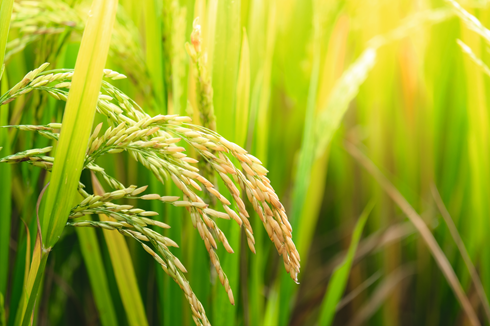
Constrained by the chemical and physical functionality of current options for natural waxes, coating formulators are seeking alternative, bio-based solutions – not least to comply with stricter environmental regulations and respond to sustainability needs. Modified rice bran waxes present a promising solution: High-performance additives that can enhance technical capability across applications from printing inks to agricultural coatings while catering to environmental objectives.
Wax additives: Key roles and fossil-based limitations
When it comes to sustainability and environmental compatibility, formulators face new challenges in developing additives for modern coating systems. Wax additives have always played a crucial role in surface modification across various coatings industries. These additives are typically used in concentrations between 0.5 and 5.0 wt.% in coatings or are formulated in aqueous dispersions and then added to the coating system. They are essential for controlling important properties and influence properties such as gloss, scratch resistance, abrasion resistance, slip, block resistance, haptics (feel), anti-caking and flow, to name just a few. Wax additives in use today are mainly based on fossil raw materials such as montan waxes, polyolefin waxes, Fischer Tropsch waxes and other mineral-based waxes (e. g. paraffin wax), as well as few other natural waxes.
A growing focus on sustainability and stricter environmental regulations have led to an intensified search for alternative, bio-based solutions. Existing natural waxes may seem like an obvious choice, but they may have considerable suitability constraints for certain applications. Compared to synthetic or fossil-based alternatives, existing natural waxes can be limited in their chemical and physical functionalities, which narrows their use in various industrial and consumer-related applications. Some of these natural materials can be too soft or have a high oil and resin content, which make them either incompatible with the coating system or prevents developers achieving the desired final properties.
Reading tip: bio-based coatings
The EC Tech Report Bio-based Coatings is a hand-picked compilation of all the key aspects concerning bio-based coatings, offering the latest technical developments. Leading R&D experts present their various binder developments, how binders can be produced sustainably and also how the performance of your coatings can be optimised. Exclusive market insights and data as well as an impressive package of digital bonus material round off this Tech Report.
From rice bran to a high-performance additive
In this context, the development of modified rice bran waxes and their micronised variants represents a significant breakthrough. The innovation is based on the dedicated modification of (crude) rice bran wax, a renewable raw material. The source material (crude rice bran wax) mainly consists of long-chain saturated carboxylic acid esters with long-chain aliphatic alcohols. Crude rice bran wax is a valuable non-food competing by-product of the rice oil industry and is obtained when rice bran oil is dewaxed. This specific composition of crude rice bran wax and the manufacturing process (polar modification) forms the basis for the resulting additive properties. Figure 1 illustrates the production process.
The oxidation process step enables the acid number to be precisely controlled and thereby also the polarity of the final product. Oxidative treatment not only leads to improved colour characteristics, but also to increased stability and quality consistency of the products. These properties are crucial for broad usability in various formulations and coating systems. In addition to oxidation, the product undergoes further chemical modifications, for example saponification with mineral salts, depending on the field of application. These modifications give the material additional properties, such as enhanced thermal and mechanical stability, greater hardness and other application-specific features, e. g. optimised solvent retention.
Tailored performance through process optimisation
The special manufacturing process makes it possible to achieve various technical properties and specifications. A wide range of potential end uses can be achieved with acid numbers of up to 140 mg KOH/g, which can be set precisely to the needs of the application, and saponification values of up to 185 mg KOH/g. The drop point of the products can be fine-tuned between 70 °C and 110 °C, ensuring good processability and thermal stability in the individual applications. Table 1 summarises the ranges of these adjustable key parameters.
Specific applications require micronised wax additives. Being able to control particle size and distribution is vital for the performance of the additives in these specific applications. By optimising the process technology, it is possible to achieve a tuneable average particle size of less than 15 µm.
Versatile use of modified rice bran waxes
Modified rice bran waxes show outstanding performance in various coating applications – from printing inks to can and powder coatings. They offer excellent dispersibility, scratch resistance and sustainability advantages, especially in PFAS-free and bio-based formulations.
Further insights in the full article:
-
Technical benefits for printing inks, including slip control and process adaptability
-
PFAS-free can coatings with improved abrasion resistance and transport stability
-
Use in low-temperature powder coatings for better pigment distribution and surface quality
-
Applications in agriculture and care products as microplastic-free, biodegradable additives
-
Potential as a natural barrier in paper coatings, replacing conventional PE films